Integrating SEO Into a Cybersecurity Content Strategy
Expert authorship and compliance frameworks matter more than traffic volume in cybersecurity SEO.
Cybersecurity vendors carry a combination of pressures no other B2B category deals with at the same time. Their buyers are trained, professionally, to spot a weak claim the way a proofreader spots a typo. And standing between the vendor's content and the eventual click is a layer of AI tools that didn't exist in the SEO playbooks most marketers learned from.
Start with YMYL. That classification pushes visible expert authorship and demonstrated trust much higher up the priority list than it sits for, say, a project management SaaS tool. Google wants to see visible expert authorship, references to frameworks practitioners actually use like MITRE ATT&CK or NIST CSF, certifications like CISSP or CISM attached to real names, and evidence the writer has done the work. A mediocre article in horizontal SaaS might limp along on page four forever. In cybersecurity, that same mediocre article more commonly never ranks.
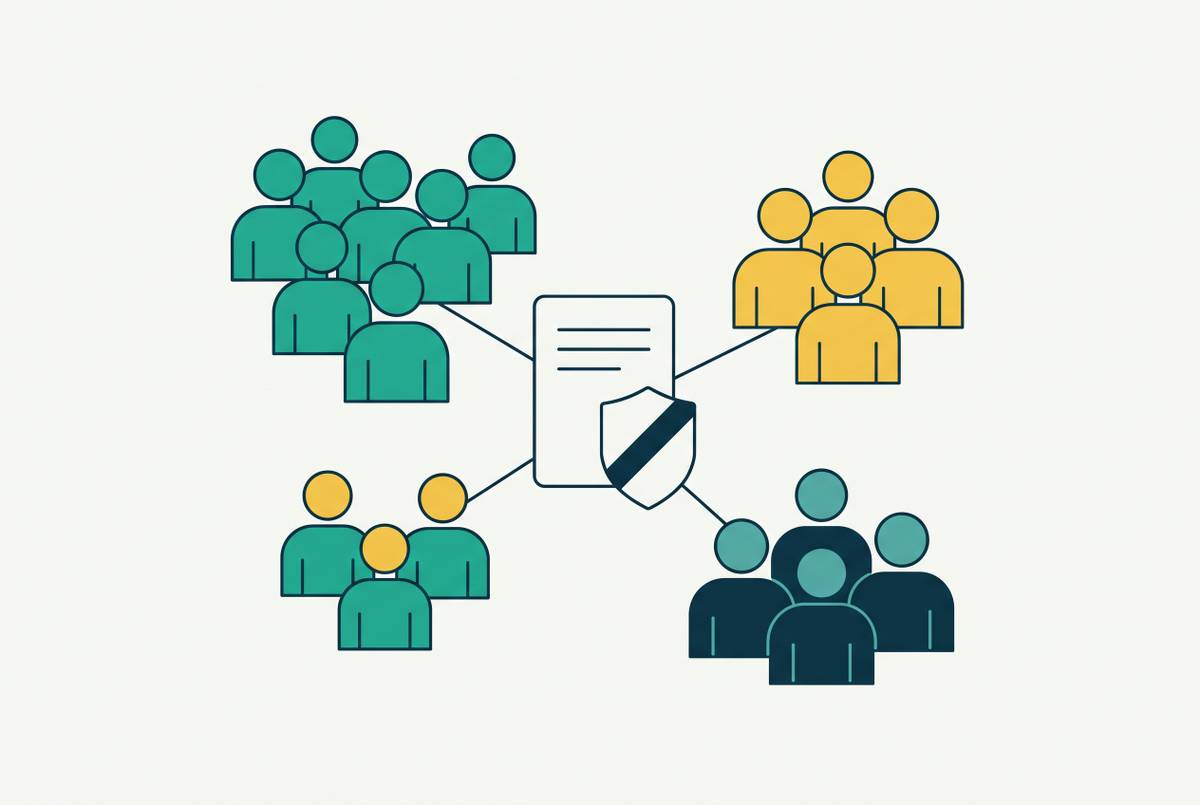
Then there's the audience. A CISO, a SOC analyst, an IAM admin, a compliance officer, a CFO signing the check: this buying group reads vendor content the way an auditor reads an RFP response. Every claim gets weighed. Every missing source gets flagged. Polished copy that's light on substance pulls in traffic, but it generates almost no engagement once a practitioner actually lands on the page. Content written with operational specificity does the opposite: lower polish, higher trust, more time on page, more follow-through.
Buyers now search differently, and that has changed the funnel. A CISO evaluating vendors doesn't type "cybersecurity company" into Google. They ask peers who've already been through the buying process, they run the question past an AI tool, and only then do they Google the specific firm name to check it out. That means SEO now has to serve two jobs at once: showing up when a buyer verifies a name they already heard, and showing up when an AI tool is deciding which names to mention.
Layer onto that one more structural wall: the highest-intent search results pages are dominated by analyst firms, not vendors. Searching "SOC 2 compliance" or "zero trust architecture" places Gartner, Forrester, and NIST above any single vendor in the results. A vendor chasing those broad category terms is competing with the institutions that define the category, and that's a fight most vendors lose before a competitor even enters the picture.
AI-mediated discovery and vendor ranking
Cybersecurity SEO in 2026 runs on two channels at once, and neither one is optional. Google organic still matters for compliance-intent searches because those searches carry real evaluation and vendor-selection intent. AI-powered recommendation inside tools like ChatGPT, Claude, and Perplexity matters because that's increasingly where the shortlist gets built before a human ever opens a search bar, and a large share of cybersecurity vendors currently get zero citations inside those answers.
AI platforms treat security content with extra suspicion compared to most other categories, which makes sense given how much damage bad security advice can do. Practically, that means a vendor can't assume an AI engine will cite them just because the content exists and is reasonably well written. Citation requires the same trust signals Google has always wanted, applied at a scale a machine can read and verify, not just a human reader.
AI Overviews have also started answering plenty of informational cybersecurity questions directly on the search results page, which quietly changes the job of informational content. That content now supplies the raw material an AI Overview pulls from rather than being the destination a buyer clicks through to, and the real risk is disappearing at the exact moment a buyer is narrowing down a shortlist, a much more expensive thing to lose than a click.
Not every query behaves this way, though. Searches like "SOC 2 readiness for SaaS companies," "ISO 27001 consulting for financial services," and "CMMC 2.0 gap assessment for defense contractors" These searches still generate clicks because the intent behind them is hiring. An AI Overview can summarize what SOC 2 is. It can't answer "which firm should I hire to get us through my CMMC audit," because that answer depends on trust, fit, and track record, not facts that sit neatly in a snippet.
A practice built around earning visibility inside AI-generated answers occupies that space, running parallel to traditional SEO as a complement to it.
Compliance-framework specificity as the stronger SEO foundation over broad threat messaging
The vendors performing well in both search and AI recommendation share a decision that separates them from everyone still publishing generic threat content. They've built their content around compliance frameworks, SOC 2, ISO 27001, CMMC 2.0, HIPAA, NIST CSF, rather than around threat categories like ransomware or phishing. Framework-specific searches carry evaluation intent, and an AI Overview can define a framework, but it can't tell a buyer which vendor will get them through their audit.
This is an architectural choice about how content gets organized, not a stylistic preference for one topic over another. Picking compliance frameworks as the organizing structure determines what every cluster, every internal link, and every piece of supporting content is built around for the next year.
Within that structure, clusters need to separate into at least three intent lanes: awareness intent, evaluation intent, and decision intent. Internal links should follow that same path, so a reader who's ready to buy doesn't get routed back to a beginner's explainer on what SOC 2 even is. Mixing all three intents into one undifferentiated cluster weakens conversion, because it forces a decision-stage visitor to wade through content meant for someone three steps behind them.
A properly built compliance cluster reads like a structured knowledge path. It covers readiness assessment workflows, control implementation sequencing, documentation and evidence mapping, internal resource planning, the failure points that trip companies up most often, how to pick an auditor, realistic timelines, and what actually drives cost. Built this way, Google can see real depth and coverage across the topic. Buyers reading it can feel that the vendor has actually done this before, which is a different kind of signal than keyword density ever was.
One more wrinkle applies to vendors entering categories so new that search demand hasn't formed yet. Targeting the brand-new category name directly is a losing bet, because nobody's searching for it. The smarter move is ranking for the symptoms, the adjacent terms, and the use cases buyers are already typing into Google, then introducing the new category name inside that content once the reader is already there.
The multi-stakeholder buying group's effect on content at each stage
Cybersecurity content strategy breaks down fast when you build it for a single buyer role, usually the CISO, while ignoring the rest of the room. The actual buying group includes security engineers, compliance officers, and financial stakeholders, and each one searches differently, evaluates differently, and forms an opinion long before a vendor ever gets a sales call on the calendar.
Security engineers, for instance, aren't looking for vision statements. They want technical validation and configuration depth: threat writeups, detection labs, post-mortems, implementation case studies. Vendor documentation matters enormously to this group, maybe more than any other content type, because it's written to be used. A practitioner reads docs as the most honest thing a vendor publishes, precisely because nobody bothered to make it sound good.
Buyers across this whole group typically read several pieces of content before a vendor ever enters the picture, and the SEO traffic that actually turns into pipeline is the traffic that matches the reader's stage in the decision, not just the right industry keywords. A page that ranks for a broad term but addresses the wrong stage of the journey pulls in visits that go nowhere. Traffic without pipeline is a vanity metric with a nice chart attached.
All of this sits on top of a buyer who is structurally cautious by nature. A CISO who picks the wrong vendor risks breach exposure, regulatory penalties, and a very uncomfortable conversation with the board. That level of risk means trust outweighs feature differentiation almost every time, and building that trust takes a stretch of sustained, consistent content over a real cultivation period, not a two-week sprint before a product launch. Content strategy has to be built for that long cycle, covering every stage of the buying group along the way, or the deal gets lost in the stage left uncovered.
Original research as the content format that compounds across search and AI citation
Original research is the one content format that keeps paying out long after publication, in both search rankings and AI citations, and the clearest evidence for that comes from companies already doing it at scale.
CrowdStrike names its adversaries: FANCY BEAR, COZY BEAR, SCATTERED SPIDER, VANGUARD PANDA. Those names turn abstract threat actors into entities that search engines and AI models can retrieve and reference across years of annual reports. The 2026 CrowdStrike Threat Hunting Report backs the model with specifics that no competitor can casually replicate: one LLMJacking campaign that generated nearly 200,000 API requests in two minutes, and vishing intrusions in the first half of 2026 that roughly doubled compared to the second half of 2025. That level of detail is what earns both practitioner trust and editorial citation, because there's nothing vague left to argue with.
Wiz Research built a similar position in cloud security through a steady drumbeat of named vulnerability disclosures: ChaosDB, OMIGOD, ExtraReplica, BingBang. That consistent cadence made Wiz the default reference point for cloud-security vulnerability research. Cisco Talos and Palo Alto Unit 42 run the same playbook with named research teams, steady publishing schedules, and deep archives, all of which AI engines treat as primary sourcing.
Cloudflare Research shows how the principle travels outside pure threat intelligence. Cloudflare sits on broad internet edge infrastructure, so it has structural visibility into DDoS patterns and BGP routing that almost nobody else has access to. Publishing on top of data a company actually, observably has access to reads as evidence. Publishing opinions dressed up as insights reads as promotion, and AI engines have gotten good at telling the two apart.
An annual survey or threat report earns media coverage, backlinks, and AI citations all from the same piece of work. More importantly, it's a format competitors can't copy without doing the equivalent underlying research themselves. That makes original research a competitive moat that compounds over time, unlike a seasonal traffic tactic that fades once the next content trend arrives.
Technical writing specificity as an E-E-A-T and conversion signal
The specificity that earns a practitioner's trust is the same specificity that raises a page's E-E-A-T score. Vendors writing the way practitioners actually think don't have to pick between ranking well and sounding credible. The two pull in the same direction.
Compare two sentences. The first: "advanced protection against sophisticated identity-based attacks." The second: "detects credential stuffing through per-account rate limiting and device fingerprinting, with configurable thresholds, and does not currently cover session hijacking after successful authentication." The first sentence asserts something no reader can test. The second tells a practitioner what the product does, how it does it, and where its coverage stops. Naming the gap is what makes the rest of the claim believable. Vendors willing to say what their product doesn't do tend to get believed about what it does do.
MITRE ATT&CK technique identifiers work the same way. "Detects T1078 Valid Accounts" names an unambiguous, universally recognized technique that a reader can go look up and test against. "Stops insider threats" names a vague category that could mean almost anything. Only one of those two phrases reads as credible to someone who evaluates security products for a living, and it isn't the one that sounds more impressive on a landing page.
Authority in this category now runs on proof. It comes from named expertise, relevant certifications and framework references where they genuinely apply, customer outcomes backed by real case studies, and implementation detail specific enough to be checked. Backlink count alone doesn't move the needle the way it might in other verticals.
Microsoft's presentation at RSAC 2026 is a useful demonstration of this posture applied at scale. Instead of asserting that its AI capability was impressive, Microsoft showed up with specific metrics from several customers: turning on Defender agents saved hundreds of hours of work while improving both accuracy and productivity. Practitioners now use that standard to calibrate every other vendor claim they read afterward. A claim with numbers behind it sets the bar that a claim without numbers can't clear.
Structured data and technical SEO hygiene as drivers of machine-legible authority
Content that earns a practitioner's trust still leaves value on the table if a machine can't read it properly. Structured data translates the authority built through research and specific writing into a format search engines and AI platforms can retrieve, attribute, and surface to a user asking a question.
Practitioner-led depth content and machine-readable structured data are two expressions of the same authority system, one aimed at a human reader doing due diligence, the other aimed at the crawlers and language models deciding whether to cite that reader's source.
Schema markup, including Article, FAQPage, HowTo, and Organization schema, gives AI engines structured attribution signals: who wrote the piece, what organization stands behind it, what kind of content it is, and how its claims are organized. Without that markup, a page can carry genuine expertise and still get passed over, simply because the system reading it couldn't parse who said what, or why it should trust the source enough to repeat it. The content earns the authority. The structured data is what lets that authority travel.