Threat Intelligence Sharing Communities as Content Source Material
Security teams are sitting on goldmines of sector-specific threat intel they rarely use.
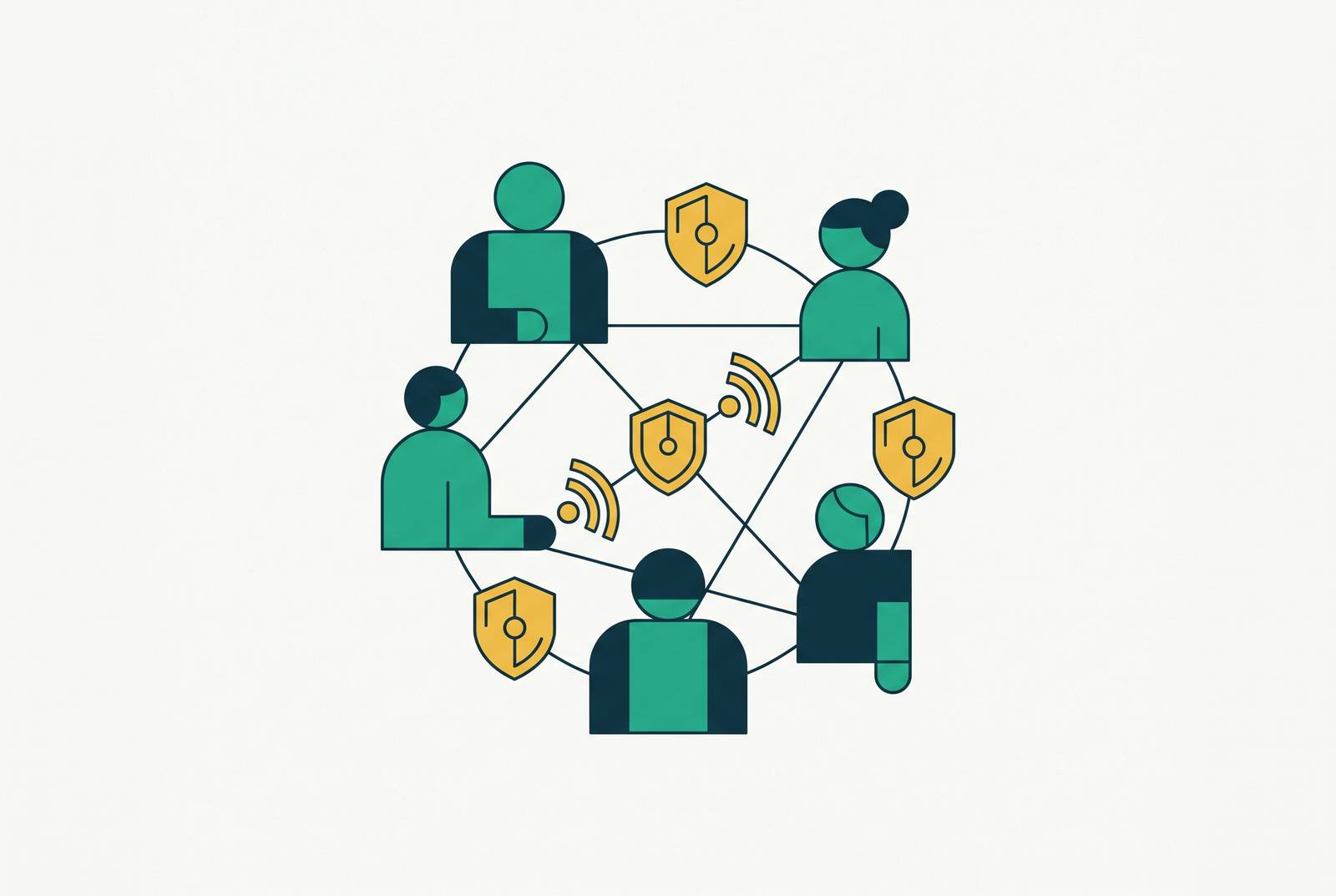
ISACs and ISAOs pump out sector-specific threat intel every single day, and most security content teams are sitting on top of it without touching it. Threat Intelligence Sharing Communities as Content Source Material.
How threat intelligence sharing communities produce signal
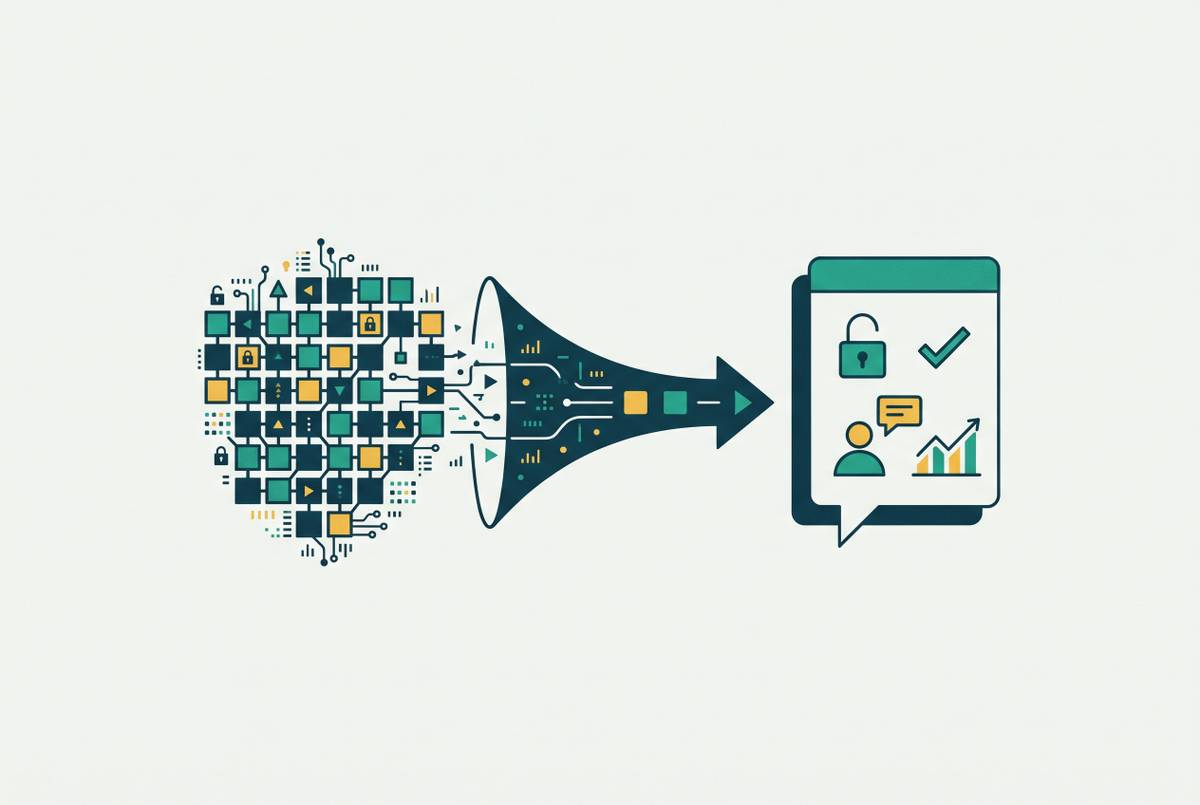
ISACs and ISAOs are structured intelligence-production systems, not discussion forums: members contribute IOCs, TTPs, mitigation strategies, and incident data, and communities analyze, normalize, and redistribute that signal. Two channels carry that signal. One is machine-to-machine, where STIX and TAXII feeds pipe straight into SIEMs and SOARs without a human touching them. The other is human-to-human: analyst briefings, vetted alerts, working group findings, the stuff that gets discussed out loud before it gets written down.
The output sorts into three tiers, and this matters more than it sounds like it should. Strategic intelligence covers executive-level risk trends. Operational intelligence covers campaign-level adversary behavior. Tactical intelligence is the ground-level stuff: hashes, IPs, domains. Each tier lines up with a different reader and a different kind of content, which gets its own section later on.
The roster of active communities is bigger than most people assume. MS-ISAC covers U.S. state, local, tribal, and territorial governments. Health-ISAC covers the global health sector. FS-ISAC handles financial services, RH-ISAC handles retail and hospitality, and then there's IT-ISAC, Auto-ISAC, EMR-ISAC, the Energy Analytic Security Exchange for energy, LS-ISAO for law firms, and the Cyber Defence Alliance, which bridges financial services and law enforcement. That's a wide, deeply organized part of the internet. That's a whole ecosystem, organized by industry, each one speaking a slightly different dialect of "we got hit, here's how."
And it's not shrinking into one mega-group, either. A ransomware attack on a hospital and a ransomware attack on a retail chain are the same technique wearing two very different costumes. Which means a healthcare vendor pulling intel from a fintech feed is basically reading someone else's mail. The sourcing has to match the sector, or the content reads generic the second a practitioner opens it. Specialization is expanding: a November 2025 analysis by Ian Andriechack (OTICS-ISAC) argues that broad umbrella groups cannot deliver sector-specific expertise because each sector faces unique operational pressures, regulatory requirements, and risk profiles, with the same attack type carrying different implications in healthcare than in retail.
The sector-specific signal these communities are generating right now
Numbers help make the case that this isn't a hobby operation. MS-ISAC switched to a fee-based membership model in 2025 and has since crossed 5,000 members. That's organizations paying real money for access, which is a much stronger signal of value than a mailing list nobody unsubscribes from.
The 2026 ISAC Annual Summit pulled in 746 registrants from all 50 states and U.S. territories, backed by more than 50 sponsors and partners. Twelve plenary sessions and 42 breakout sessions produced 111 distinct, high-priority implementation steps. That's a working group producing coordinated action across state and territory lines. That's an output machine.
Health-ISAC alone has been prolific. Its public output from September 2026 includes a MedTech Security Baselines white paper, a Human Risk Management Maturity Model, a Threat Actor Playbook on conversational social engineering in care settings, a piece called "The Human Risk Layer of AI," and coverage of the ShinyHunters vishing campaign. Each one of those is a standalone content seed. Health-ISAC also joined Microsoft's legal action against EvilTokens, an AI chatbot built specifically for cybercrime, because healthcare organizations were among the targets. That's ISAC participation escalating past advisories and into actual legal enforcement, and it means intelligence sharing with teeth rather than theoretical intelligence sharing.
MS-ISAC's September 2026 output included a blog post on a Dual-RMM Phishing and PowerShell RAT campaign targeting SLTTs, plus advisories covering vulnerabilities in ServiceNow's AI Platform and Google Chrome. Dated, specific, sector-tagged. That's the raw material.
AI runs through all of it now, on both sides of the fence. Running threat data through AI analysis risks breaking the chain of custody, which chips away at confidence in the integrity of what's being shared. Translation: if you can't trace where a piece of intel came from, you can't trust it, no matter how fast the AI produced it.
How STIX, TAXII, and MITRE ATT&CK structure the intelligence content teams encounter
STIX and TAXII are the plumbing. TAXII 2.1 sets up a REST API with API Roots and a set of feed-like groupings, where clients authenticate, find the right grouping, filter by time or object type, and push or pull STIX objects back and forth. CISA runs its Automated Indicator Sharing program on a bidirectional TAXII connection, letting participants send and receive machine-readable STIX indicators in real time.
This keeps things honest, though. An analysis of roughly 6 million STIX objects across nine years found that security providers generate only 2,063 unique daily STIX objects, which isn't nearly enough given the current volume of threats arxiv.org. Worse, 37.89% of STIX objects show heavy redundancy even from a single provider arxiv.org. So the standard exists, the pipes are built, but fragmentation and implementation headaches are still very real. That's a fair reflection of the system as it stands. It's the honest state of adoption, and it's a legitimate angle on its own: writing about what STIX and TAXII can't yet do is just as credible as writing about what they can.
MITRE ATT&CK fills a different gap. It gives writers a stable, publicly documented vocabulary for adversary behavior, one that doesn't require reproducing anything restricted to members. Techniques and sub-techniques are citable and linkable, and any security engineer reading the piece will recognize them instantly. Putting STIX/TAXII structure together with ATT&CK mapping separates content with real technical bones from a vague "hackers got in somehow" breach post. Understanding what these standards are, and where they still fall short, is a content angle in its own right.
Membership restrictions: prohibitions and available alternatives
Content never enters the picture for TLP:RED, full stop. TLP:AMBER needs careful handling. TLP:GREEN and TLP:CLEAR are fair game with attribution. Faraday Security documents a responsible anonymization pipeline that runs extraction, then generalization, then aggregation, then legal review. Content teams don't have to run that pipeline themselves, but understanding it explains why a member organization can publish some things and not others.
What's off-limits for content without membership and legal clearance: raw IOC feeds, member-only briefings, attribution data contributed by named member organizations, and incident details shared under TLP:RED or TLP:AMBER.
The RSAC 2026 panel's core worry applies directly here. ISAC leaders are concerned that careless or automated use of shared intelligence erodes the quality of the signal and burns member trust. Content teams that misuse or misrepresent that intelligence aren't just cutting a corner, they're speeding up the exact damage those leaders are trying to prevent. The analysis is the content. The indicators themselves are not. What is legitimately available without membership includes ISAC public advisories, public white papers, press releases, and event recaps (Health-ISAC's public white papers from September 2026 are examples), CISA AIS public documentation, MITRE ATT&CK entries, CVE disclosures, and public-facing ISAC blog posts and newsletters like the MS-ISAC's Cybersecurity Quarterly.
The content formats that translate community intelligence into practitioner-credible material
Sector-specific threat roundups do well because they save practitioners time: a monthly or quarterly synthesis of public advisories, ISAC white papers, and relevant CVEs, mapped to one named sector. Readers bookmark those because they'd otherwise have to go dig up the same material themselves.
ATT&CK-mapped technique explainers go a level deeper. Take a technique ISACs are actively warning about, like the conversational social engineering in care settings that Health-ISAC covered in its August 17, 2026 Threat Actor Playbook, and walk through the adversary behavior, the detection logic, and the defensive response. That format proves the writer actually understands the mechanics, not just the headline.
Case study reconstruction works from the public record. When an ISAC references a campaign, ShinyHunters vishing, DDoS against U.S. banks, the Dual-RMM phishing campaign against SLTTs, the attack chain can be rebuilt from public sources, mapped to ATT&CK, and framed around the defensive lessons. Nothing restricted gets reproduced, and the piece still shows real understanding of what happened.
Intelligence-to-action translation is underused. Those 111 actionable steps from the community summit are exactly the kind of editorial distillation ISACs produce but rarely package for anyone outside the room. Turning that into a prioritized framework for a specific audience is doing work the community itself skipped.
Trend synthesis rounds it out. The AI-and-ransomware tension Health-ISAC has laid out publicly, autonomous ransomware operations on one side, real-time sharing as the disruption mechanism on the other, is solid ground for a strategic piece aimed at CISOs, as long as the sourcing stays transparent. None of these formats are quick. They take research time. But that's exactly the trade-off: fewer, deeper pieces earn more credibility than a pile of thin ones.
Matching intelligence tier to buyer persona and content format
Tactical intelligence, the hashes, IPs, CVEs, belongs in front of security engineers and SOC analysts, delivered as technical advisories, detection rule write-ups, or vulnerability briefings.
Operational intelligence, campaign behavior and adversary TTPs, is for security architects and threat hunters, and it shows up best as ATT&CK-mapped technique analysis, threat actor profiles, and campaign retrospectives built off public ISAC reporting.
Strategic intelligence, covering sector risk trends, regulatory pressure, and AI-era threat posture shifts, maps to CISOs and VPs of information security, in formats like executive briefings, quarterly threat landscape reports, and board-level risk narratives, with the RSAC 2026 panel discussion serving as a public-record example of this tier of output. That's executive briefings, quarterly threat landscape reports, board-level risk narratives. The RSAC 2026 panel itself is a public example of exactly this tier of output.
None of this stops at the CISO's desk, though. Compliance officers want regulatory framing. IT directors want integration context. Procurement wants policy and certification paperwork. ISAC public output often has raw material for all of them, if someone reads it with those roles in mind rather than defaulting to "write it for the CISO and hope it trickles down."
The stakes are higher than they look. Per 6sense's research, buyers make first contact with a vendor around 61% of the way through their own buying journey, and 95% of the time they pick from whatever shortlist they built on day one Cybersecurity Marketing: 2026 Strategies That Earn Trust. Which means the intelligence-sourced content sitting at each tier is doing its credibility work long before a sales rep ever gets a reply Cybersecurity Marketing: 2026 Strategies That Earn Trust.
Why the shift from fear-based messaging to substantive analysis in security content marketing creates a structural opening
Fear, uncertainty, and doubt used to be the whole security marketing playbook. At least the version that worked has faded: CISOs and practitioners run into fear-based messaging so often now that it just bounces off. That's the same fatigue the RSAC 2026 panel kept circling back to when they talked about trust degradation.
CyberBridge Marketing looked at more than 200 cybersecurity company websites and found that 80% of most firms' marketing is at the bottom of the funnel, all "buy now" messaging, even though buyers typically spend 6 to 10 months researching before they're anywhere near ready to purchase. Intelligence-sourced content is built for that research window, not for the moment someone's ready to sign.
Proof affects buyer trust more directly than explanation does. Customer case studies get cited by 63% of buyers as a top influence, and generic blog posts don't even make that list chatterbubble.co. Well-sourced threat intelligence content behaves like a proof asset, not a pitch, which is why it earns a spot on that list where the generic stuff doesn't chatterbubble.co.
Then there's the search problem nobody saw coming quite this fast. CISOs and IT leaders increasingly start their research inside AI-mediated tools, and a recent benchmark found nearly three-quarters of cybersecurity vendors don't show up in ChatGPT responses at all. AI systems surface substantive, citable material, not marketing copy dressed up in security language. Generic AI-generated content has quietly stopped ranking and stopped converting, while intelligence-sourced content, with specific claims and a documented trail back to its source, is much harder to fake at scale. That difficulty is the moat.
ISACs describe themselves through a philosophy: an attack against one bank is an attack against all, per the Cyber Defence Alliance's own framing. Vendors who actually share real intelligence with the practitioner community are building the same kind of trust, and that trust is what gets them shortlisted long before any RFP shows up.
A repeatable system for extracting, interpreting, and publishing ISAC-sourced content
Start by mapping the right community to the right sector. Get the sector match wrong, and the content reads generic no matter how well it's written.
From there, build an inventory. Keep a running log of every public advisory, white paper, press release, and event output, dated as it comes in. Health-ISAC alone published seven substantive public documents between August 1 and September 17, 2026, which is enough raw material to fill a month of editorial planning on its own.
Before any of that material goes into a brief, run it through the TLP filter. TLP:CLEAR and TLP:GREEN with attribution are safe. Anything marked higher needs legal review, and possibly a conversation with whoever manages your ISAC membership.
Then map it to ATT&CK before writing a single line. Identify the technique and sub-technique the intelligence actually describes. That mapping is the bridge between raw signal and something a practitioner can read and trust, and it's also the tell that shows a security engineer the writer understands the behavior, not just the headline.
Pick the format by persona tier from there: tactical becomes a detection advisory or rule write-up, operational becomes a campaign analysis or technique explainer, strategic becomes a CISO briefing or quarterly report.
Last step, and the one that's easiest to skip: give something back. If the organization is an ISAC member, content built from that membership should feed something back into the community, anonymized findings, engagement with published work, amplification of advisories that help other members. Apply that same logic to content, and instead of a one-way extraction it functions as what ISACs were built to be in the first place.
None of this works as a bolt-on. A content operation that treats threat intelligence literacy as its foundation looks completely different from a general content shop that picked up a cybersecurity client and started borrowing vocabulary. Practitioners can tell the difference in about one paragraph, and that gap is why ISAC-sourced content either builds trust or quietly torches it.
Sources
- A Milestone Moment for the MS-ISAC Community
- Multi-State Information Sharing and Analysis Center
- Health-ISAC Home
- ISACs confront AI’s promise and peril for threat intelligence-sharing | Cybersecurity Dive
- Why We Need More ISACs: Specialized Threat Intelligence Sharing | OTICS-ISAC Blog
- How to Participate in Threat Intelligence Sharing (ISACs) Without Exposing Sensitive Data | Faraday
- Cybersecurity Marketing: 2026 Strategies That Earn Trust
- Health-ISAC Traffic Light Protocol (TLP)