Editorial Calendar Management for Security Content Teams
Dynamic threat intelligence, not quarterly planning cycles, should drive security content calendars.
A static editorial calendar, the kind built around fixed quarterly themes and keyword research done once in January, is solving the wrong problem for a security content team. It optimizes for publishing consistency while the buyer's threat environment moves underneath it in real time. The calendar is stable, the market it's supposed to serve is not.
Buying a cybersecurity product is a sequence: awareness gets triggered by a breach headline or a new compliance deadline, then the buyer moves into category research, then third-party validation, then technical proof. Every stage of that sequence is driven by what's happening in the threat landscape right now, not by what a vendor scheduled three months ago during a content planning offsite. A piece written in January about a threat class that peaked in March is answering a question nobody's asking anymore.
These deals also take a long time and involve a lot of people signing off. That means buyers spend months doing deep, sustained research before a sales conversation even starts. Content that doesn't speak to current risk conditions gets skipped at that research stage. It never even gets the chance to lose a deal, because it never gets read.
Layer onto that the fact that fear-based marketing has stopped working on this audience. Security buyers have sat through enough "hackers could be in your network right now" campaigns to develop an immune response to them. What earns attention now is content written by practitioners, grounded in specific and current data. A calendar that can't produce that on the timeline the threat landscape actually moves on is a planning problem that starts with what signal the calendar is built around.
The threat intelligence cycle as an editorial signal
Threat intelligence used to live entirely inside the security operations center, feeding detection rules and incident response playbooks. It's now a strategic input that tells a content team what buyers are actively managing before any vendor has said a word about it publicly.
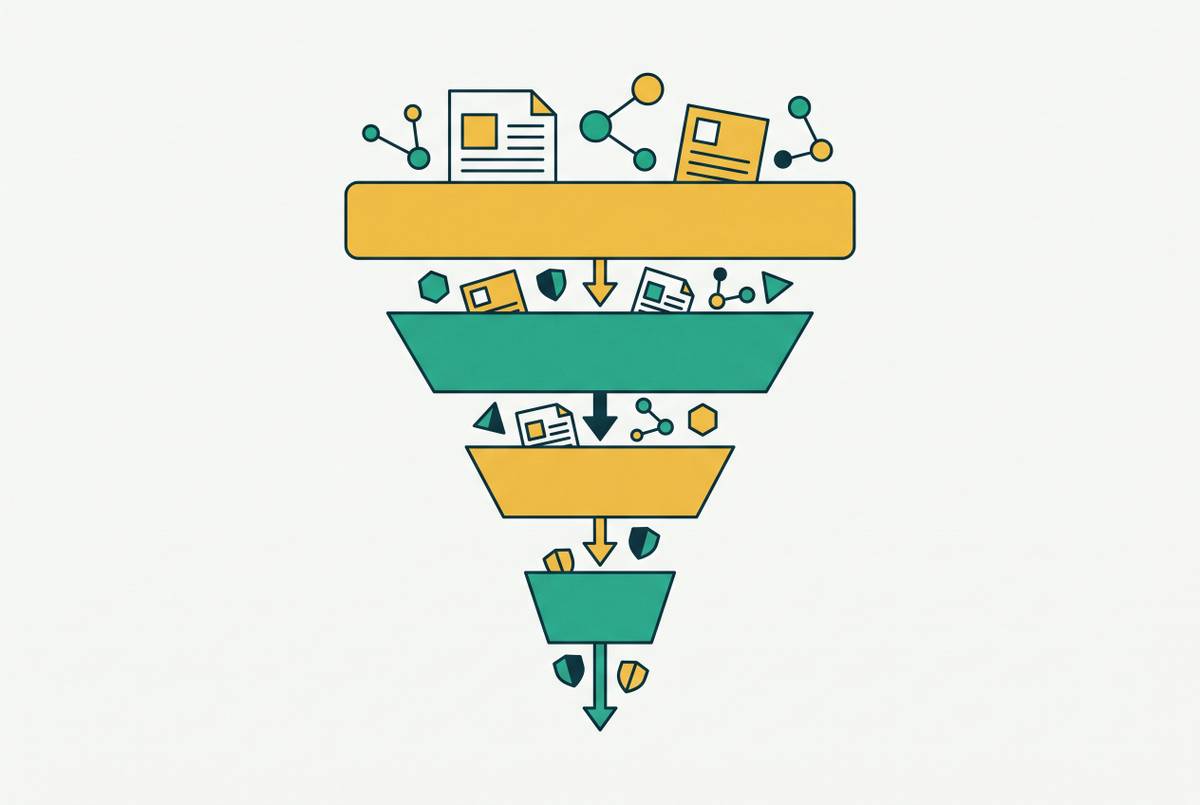
Security teams already run an intelligence cycle with six stages: planning and direction, collection, processing, analysis, dissemination, and feedback. That structure maps onto content production almost exactly. Collection and analysis become the editorial brief. Dissemination is the published piece itself. And the feedback loop, how buyers respond, what they search for next, what questions show up in comments and sales calls, mirrors the feedback stage that sends analysts back to refine their next report.
The threat actors, campaigns, and vulnerability classes that intelligence teams are tracking today are the exact topics a CISO will be standing in front of a board explaining next quarter. A content team reading the same intelligence those CISOs are reading is writing directly into that future conversation. A content team working off a quarterly theme calendar is, at best, guessing.
Treating the threat landscape as the primary editorial signal gives a calendar something a competitor can't easily copy: a living, external source of prioritization that doesn't depend on a marketing team's internal assumptions about what's interesting. The intelligence sets the agenda. The calendar just has to be built to listen to it.
The 70/30 structure that makes a threat-responsive calendar workable
None of this means throwing out the planned calendar and setting fire to the content roadmap every time a new threat emerges. It means building two lanes that run side by side, on purpose, with rules decided in advance.
The practical split: the large majority of output is evergreen, educational content that builds topical authority over months. The remainder is reserved for reactive work, content built to respond to the threat landscape as it shifts. Both lanes need their own production rules, because a threat doesn't wait for the next planning meeting.
That reactive lane works best with defined response tiers. A four-hour tier covers the kind of breaking development that demands a short, factual post fast, before the news cycle moves on. A 24-hour tier covers developments that need a bit more analysis but still have to land while the story is live. A one-week tier covers threats that deserve a fuller technical treatment once the initial dust settles and the real implications are clearer. Without those tiers set in writing ahead of time, teams end up negotiating turnaround speed in the middle of a live threat, which is exactly when bad decisions get made quickly.
This structure needs to be in place, because skipping it leads to one of two outcomes. Reactive content crowds out the planned work because every threat starts to feel urgent, or reactive content never gets published at all because nobody pre-approved a path for it and by the time approval happens the threat is old news.
The evergreen majority is the foundation that makes the reactive minority credible, not a backlog of filler to pad the calendar between emergencies. A vendor who only shows up to publish when something breaks looks like they're chasing headlines. A vendor with a deep library of expert, domain-hosted content already sitting there earns the kind of trust that makes their incident analysis worth a reader's time when the moment comes.
Mapping content to the five audience segments that make up a security buying committee
A calendar anchored to live threat intelligence can still miss the target completely if it's writing to nobody in particular. A security buying committee is at least five readers, and each one wants something structurally different from the same event.
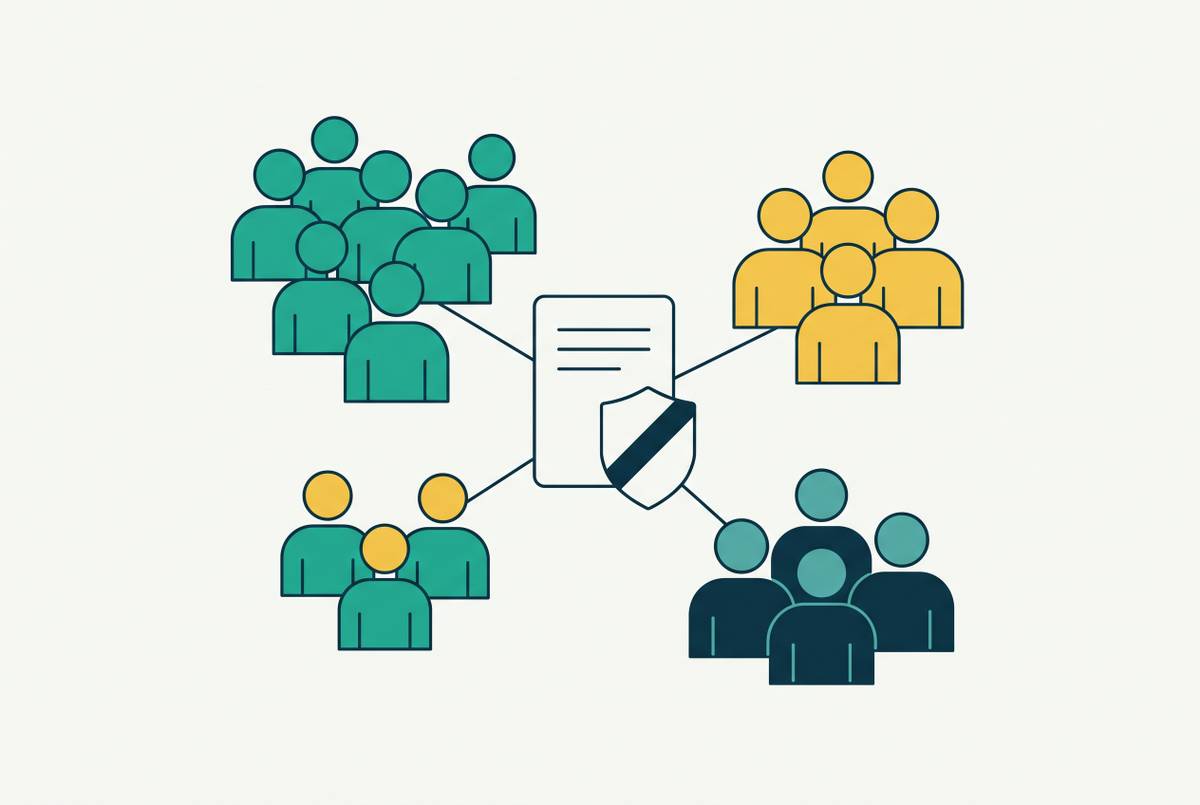
The five seats at that table: the CISO or security director, the CIO or security architect, the security engineer, the risk-and-compliance owner, and procurement and legal. The CISO wants ROI analysis and risk framing, something that helps brief a board or justify a budget line. Security engineers want technical depth and implementation detail they can actually act on. Compliance officers want regulatory updates and audit prep. Procurement wants vendor comparisons and clear SLA terms. Five different jobs, five different reading lists.
The CISO segment has a habit that surprises most marketing teams: peer validation beats analyst reports by a wide margin as a primary information source. A CISO is far more likely to trust what another CISO said in a private conversation than what a research firm published in a glossy PDF. That means community-facing, practitioner-authored content is a higher-leverage way to reach this audience than paid placement or a traditional analyst briefing. It's not an intuitive budget allocation for most marketing leaders.
The payoff for calendar architecture is that one piece of threat intelligence can fan out into several outputs. The same adversary campaign can produce a technical deep-dive for security engineers, a risk-framing brief for the CISO, and a compliance mapping note for the compliance officer. One event, three briefs, three readers, no wasted research.
Compliance content in particular tends to get shortchanged on most security calendars, even though regulatory updates and audit preparation are evergreen buying triggers that show up year-round. Building a deliberate allocation for that segment, rather than treating it as an afterthought, closes a gap most competitors are leaving wide open.
Technical depth as a non-negotiable quality standard, not a tone choice
Security practitioners read a lot of content, and they can tell within a paragraph whether the person writing it has ever actually configured the thing they're describing. Technical accuracy is the cost of entry in this market. A calendar that commits to more output than the team can technically support produces thin content, and thin content damages credibility faster than publishing nothing.
The practical way through this is layering. A single topic gets an executive summary or short-form piece for a broad audience, with explicit links out to a technical deep-dive for the security engineers and IT managers who will actually evaluate the product. That structure serves the whole buying committee without flattening the material down to whatever the least technical reader can follow.
A mandatory technical review before publication, security team sign-off before anything ships, is the mechanism that keeps fast-turnaround content accurate, since speed is when mistakes are most likely to slip through. The four-hour and 24-hour response tiers only work if review is built into them from the start, not bolted on afterward.
Publishing something technically wrong, quickly, is worse than publishing nothing. It tells a practitioner reader that the vendor doesn't actually understand the threat being written about, and that's a credibility hole that's hard to climb back out of. This is a production planning constraint as much as a quality one: it directly shapes how many pieces a team can realistically commit to in a given week and how the review workflow has to be staffed.
Original data as the content moat that a threat-intelligence-driven calendar can build
When this model runs long enough, it stops just producing content and starts producing a data asset, and that asset is the part competitors can't simply copy by hiring a better writer.
Cloudflare's work with Cloudflare Radar makes the point concretely. Cloudflare is in front of roughly a fifth of all web traffic, a position that gives it visibility into internet-wide patterns that no outside vendor can replicate from the sidelines. Cloudflare's own description of the Radar redesign calls this the opportunity to tell "unique and compelling stories about the Internet," and the content works because it's a direct function of what Cloudflare sees, not a topic a content calendar invented.
CrowdStrike's intelligence program shows what that looks like at scale over time. The 2026 Global Threat Report named 24 new adversaries tracked during 2025, bringing the total tracked past 281. Each one of those adversaries is a content hook grounded in something CrowdStrike actually observed, not a theme a marketing team dreamed up in a planning meeting. Stacked together, those adversaries become an ongoing series that stays credible precisely because it's tied to real tracking, year after year.
Not every vendor is sitting on a fifth of the internet's traffic or tracking hundreds of named adversaries, and that's fine. For a vendor without a mature data asset yet, the path is to build one on purpose: 6 to 12 months of sustained, domain-hosted, expert-authored content covering the exact problems buyers are researching. That body of work compounds into topical authority the same way Cloudflare's telemetry compounds into research nobody else can produce. Publishing it on the vendor's own domain keeps that authority there, where it can keep paying off for the vendor.
That matters more now because AI-powered research tools, often the first stop in a buyer's research process, tend to cite domains that show clear topical depth and real content authority. Relevance, structure, and data specificity seem to carry as much weight in that process as how old or established a domain is. AI-generated summaries increasingly stand in for the search results page, and a sustained, domain-hosted content program is the most durable bet in that kind of research environment.
How to implement a threat-responsive editorial calendar in practice
Moving from a static calendar to this model is a structural change to how the calendar gets built, not a one-time content refresh. It means setting up intelligence inputs, defining response tiers, mapping personas, setting production standards, and building review workflows, in that order, before the first piece of content gets planned.
Start with the intelligence feed itself. Decide what sources the content team actually reads, who inside the security organization serves as the liaison between the threat intel function and the editorial team, and what specific trigger moves something from "we're monitoring this" to "this is an editorial priority." Without that mechanism defined in advance, the reactive lane of the calendar has no reliable input and ends up running on whatever someone happened to see on social media that morning.
The 70/30 split and the four-hour, 24-hour, and one-week response tiers need to be written down as standing policy, not negotiated in the moment a threat breaks. Teams that try to decide turnaround time while the threat is actively unfolding tend to publish late, publish something inaccurate, or both.
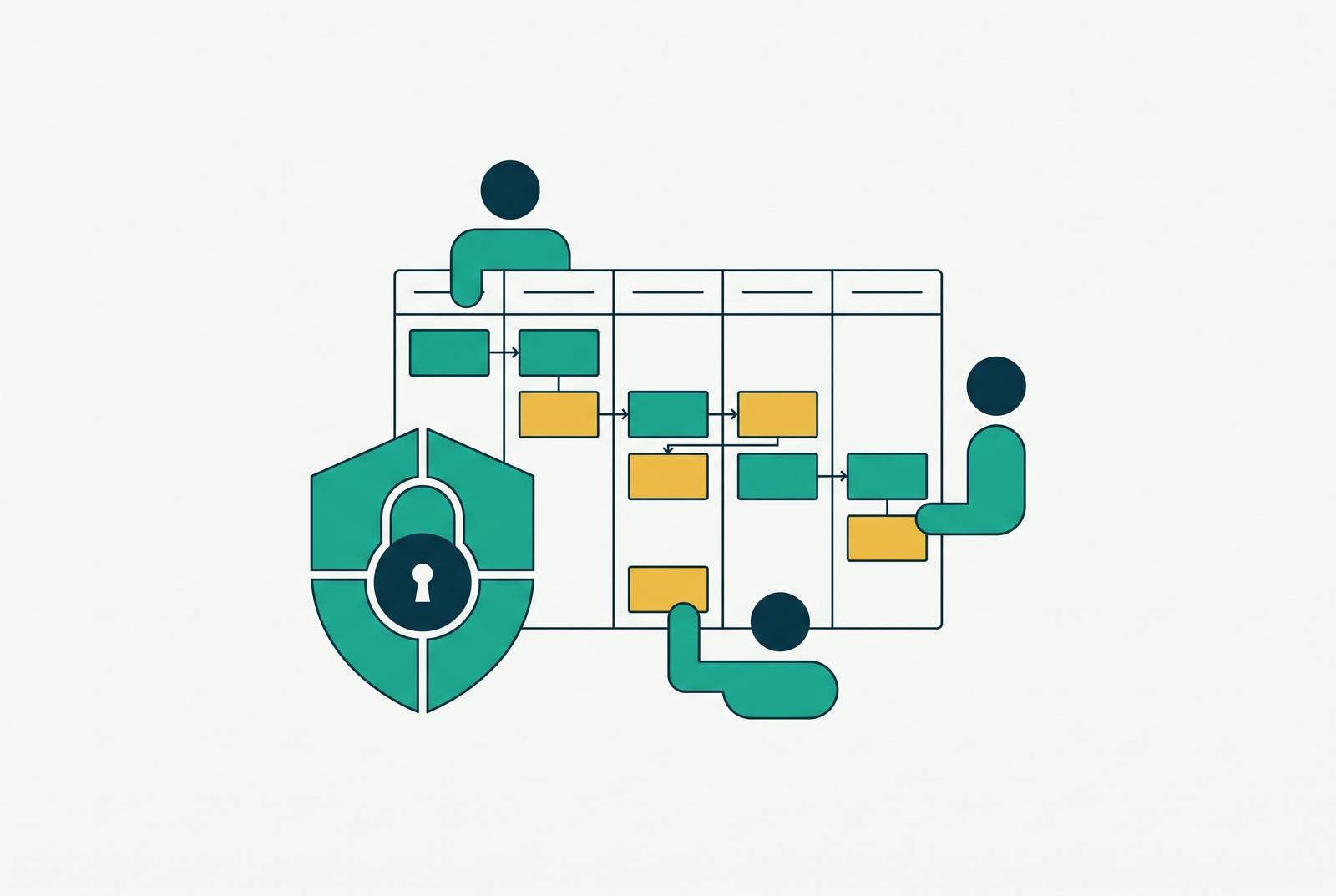
Persona mapping belongs in the calendar template itself, not in a separate strategy document nobody opens again. Every planned piece should list its target segment, the threat or topic driving it, the content format, and whether it needs technical review, with those decisions made during planning.
Compliance deserves its own standing allocation in the calendar, not just a response slot that gets filled when a regulation changes. Regulatory updates and audit preparation are evergreen buying triggers, and they're the category most security content calendars leave underweighted.
Finally, running this model well takes genuine domain fluency, the ability to brief, write, and technically review security content at the pace the model demands. That's not something a generalist team picks up quickly on the job. The intelligence-to-content pipeline only works when the people running it already understand what the intelligence actually means, which is the whole reason the threat landscape, not the calendar, gets to set the schedule.