Updating Published Security Content After Threat Landscape Changes
Vendors must update security content when threats evolve or risk losing credibility.

Published security content needs updating when threats change. Otherwise, yesterday’s advice can mislead today’s reader and weaken the vendor’s credibility. Content needs to be maintained as threat intelligence is maintained, with defined triggers, substantive revision standards, and a clear chain from new evidence to the published page.
Why published security content becomes a liability when the threat landscape moves
A security engineer opens a vendor’s phishing guide and finds the familiar advice to look for spelling mistakes. The engineer already knows that polished language no longer separates a legitimate request from a malicious one. The guide has failed its first credibility test. Before the vendor can make its case, the reader has reason to doubt whether its advice reflects the attacks practitioners face. The sales conversation has not begun, but the vendor is already losing standing in the room.
Hoxhunt’s 2026 threat intelligence report documents why that advice has become unreliable. Generative AI raised the quality baseline for phishing content, making many phishing emails polished and grammatically perfect. The attacker, unfortunately, has discovered spellcheck. The same report notes that adversary-in-the-middle, or AitM, toolkits can circumvent MFA by intercepting session tokens in real time. Content that presents traditional MFA as a reliable control without qualification therefore leaves out a condition central to its effectiveness.
These are specific contradictions. A defensive recommendation can remain readable, searchable, and wrong. Security engineers and CISOs notice because they follow the threat feeds that should inform the content. When published advice conflicts with that knowledge, the damage extends beyond the page to the vendor’s authority on the subject.
How the threat landscape now moves faster than traditional content review cycles
Annual or quarterly reviews assume that advice remains dependable between scheduled inspections. Threat change does not respect that assumption. A technique described as emerging can become a baseline attacker capability before the next review, while exploitation timelines can shift enough to undermine advice about how quickly defenders must act.
The Hoxhunt report shows how that gap develops. AitM phishing kits have become easier to deploy and more people use them, while social engineering now reaches beyond email into social platforms and recruitment channels. A guide based on an earlier threat model can leave out several parts of how these attacks now work. Its examples, assumptions, and recommendations do not necessarily age at the same speed.
Most content programs, however, run on publication schedules. Their calendars track when work is due. More writers cannot repair that mismatch by themselves. Threat intelligence is maintained continuously through defined update conditions, while content is often revisited periodically or when someone happens to notice a problem.
What threat intelligence methodology can teach content teams about update triggers
Threat intelligence provides a useful maintenance model because it distinguishes information by how quickly it changes. Content teams can borrow that tiered approach rather than treating every asset as if it has the same shelf life. A named CVE that directly affects a published topic calls for a different response from a change in a broad strategic assessment. The review model should reflect that difference. Otherwise, slow-moving analysis and urgent defensive advice end up waiting in the same queue.
For content, this means issuing real-time threat advisories for CVEs or attacker techniques that directly affect a topic, with tactical updates each month when tactics, techniques, and procedures change. Strategic content gets a review each year, but a major incident, new attacker campaign, or change in regulations can call for an earlier review. The schedule is a backstop. A defined change in the evidence can move an asset out of its ordinary cycle.
CrowdStrike’s publication model makes that separation concrete. Its 2026 Threat Hunting Report appeared separately in early August 2026 rather than waiting for the annual Global Threat Report, sharing observations and real-world case studies on attacks against trusted relationships and adversarial use of AI.
Defining the specific conditions that should trigger a content review
Teams need to set the conditions for that route to publication before the next threat arrives. A minimum viable trigger taxonomy covers vulnerability and exploit intelligence, attacker TTP shifts, published guidance invalidation, and regulatory or framework changes. It is a working set. Pre-definition lets a team decide whether evidence qualifies for review without reopening the same debate every time a feed produces something alarming.
Vulnerability and exploit triggers include a CVE relevant to a technology discussed in published content, an entry in the CISA Known Exploited Vulnerabilities catalog affecting a covered attack surface, or a meaningful change in exploitation timelines. The connection to the asset is essential. TTP triggers concern documented changes in how a named actor conducts a covered attack, new techniques that defeat a recommendation, or wider adoption of a capability previously described as specialist. AitM toolkits illustrate that last category.
Guidance invalidation deserves the highest priority because practitioners can now cite the contradiction. A Mandiant M-Trends report, the CrowdStrike report, or the Hoxhunt report may explicitly undermine a published claim or recommendation. Framework and regulatory triggers cover changes to cited frameworks such as NIST CSF or MITRE ATT&CK, or new requirements that alter the compliance landscape described. Each trigger should have an owner and a response time assigned in advance.
How to audit existing content against current threat data before building a refresh process
Triggers catch new problems, but an existing library may already contain advice that current evidence has overtaken. A one-time audit establishes that starting position. The test is not whether a piece remains relevant to its topic, but whether any claim, recommendation, or attack description conflicts with what a practitioner reading current intelligence would know. Relevance is a much lower bar than accuracy. A phishing guide can still address its topic while teaching readers to trust the wrong signals.
The audit starts by tagging each asset with its claims about threat intelligence, the TTPs it describes, and the defensive steps it recommends. Those elements are then compared with the latest primary threat intelligence sources. Discrepancies can be classified by whether they contradict current guidance, describe a superseded technique, or cite an outdated timeline. This gives prioritization something firmer than page age. It also separates a limited correction from a failure in the asset’s central argument.
Black Kite’s 2026 Supply Chain Vulnerability Report illustrates the filtering principle through its framework for narrowing raw vulnerability data by discoverability, exploitability, and nth-party visibility. The content audit needs the same discipline of filtering for consequential discrepancies. Its authority must also extend to retirement. When the core claim is structurally wrong, an inadequate revision can preserve the original credibility problem under a fresher date.
What a revision actually requires when attacker techniques have changed
A changed date is not a changed recommendation. When attacker techniques shift materially, revision requires grounding the asset in current evidence again, including the reasoning that connects an attack to the proposed defense. Practitioners can distinguish that work from a cosmetic refresh because the advice either accounts for current capabilities or it does not. A new dateline cannot do the thinking.
The Hoxhunt report provides a clear example of the required depth. Its finding that behavioral training must move from spotting urgency and errors toward questioning routine, familiar-looking requests changes the direction of the guidance. That requires rewriting the core recommendation so the advice moves readers beyond the old heuristic. The revision must follow the evidence through to the action the reader is being advised to take.
Claim-level verification supplies the first standard. Every factual claim about attacker behavior, exploitation timelines, or how well defenses work should have a primary threat intelligence source that falls within a set recency window. Unsupported claims should be removed or scoped to historical context. Recommendation integrity is the next test: defensive advice must be checked against what attackers can now do, including known bypasses.
Scope honesty applies to assets that would need to be almost fully rewritten to bring them up to date. A clear statement should say what date the asset covers and which later changes in techniques it leaves out, so readers can judge the analysis with its limits in view. The revision also needs a record. That record should state what changed, which threat intelligence prompted it, and when the change occurred.
How original threat data makes content harder to invalidate and easier to trust
Revision standards reduce the risk of bad advice, but original threat data changes how content ages in the first place. Findings based on a vendor’s SOC telemetry, incident response data, or honeypot infrastructure show what happened in a specific environment and keep claims within what was seen there. An external report describing different observations does not, by itself, invalidate what that dataset showed.
The durability comes from traceability. Findings remain useful as a historical record because readers can understand what was observed, while new data from the same pipeline can support an update. Broad claims may need to be built again when threats change. Properly scoped findings instead have a method the team can return to, making the next publication an extension of the research.
The anonymized MSSP example in the research shows this model in practice. It replaced weekly generic tips with a quarterly report analyzing anonymized alert data from its own SOC, including which attack types triggered incidents across its client base and which controls stopped them. The evidence gave practitioners more reason to trust the content. The ongoing data pipeline also made the content easy to update, so new detection data could drive publication in place of the need to find another weekly tip.
This approach builds on original telemetry-based findings, adds tactical updates when the data changes, and brings the findings together in a strategic synthesis each year. This mirrors threat intelligence operations for the same reason the trigger model does. The work is sourced, traceable, and renewable through the method that produced it. Sharing incident data, detection rates, and attacker behavior seen in specific customer environments also gives the vendor an edge that others would struggle to match without the same kind of telemetry.
Building the operational chain from new threat data to revised published page
To turn that model into routine work, every relevant signal needs a path to a publishing decision. The chain begins when a threat intelligence team or feed identifies a change connected to published content. A signal that everyone has seen but nobody is responsible for acting on has reached a waiting room.
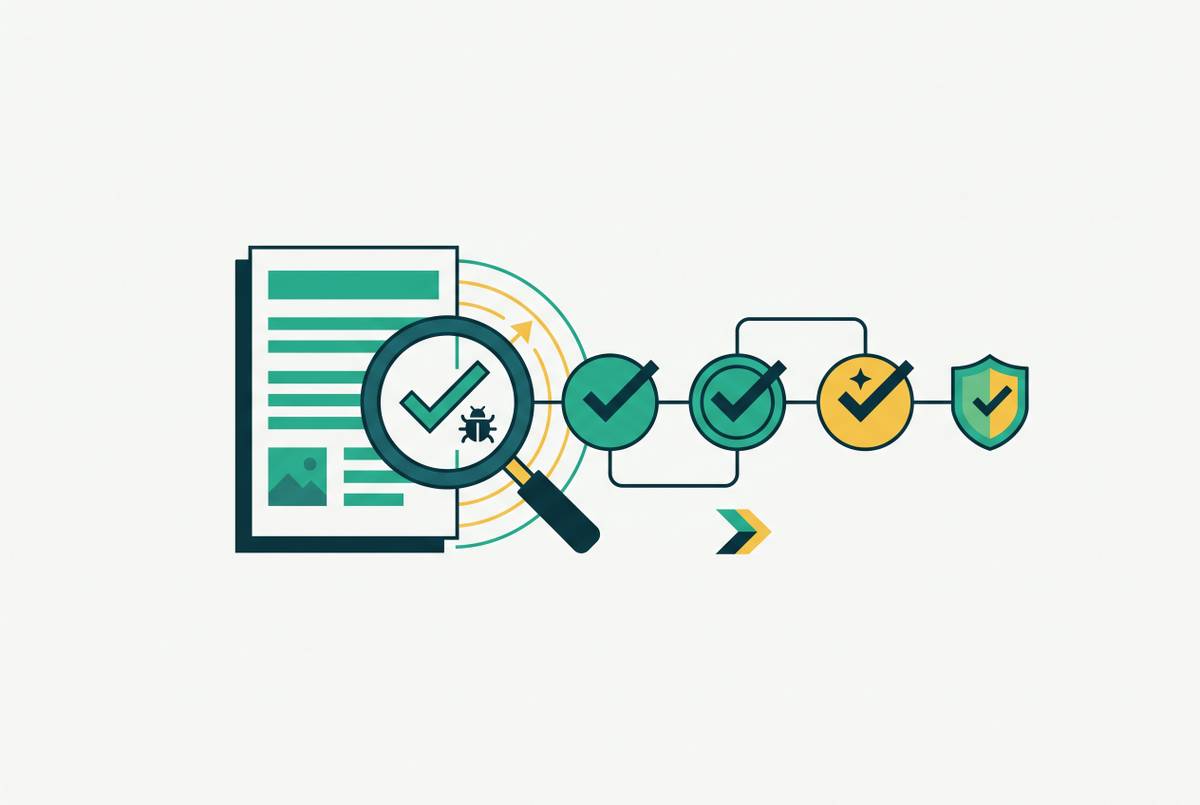
Triage then joins the content owner with a threat analyst to assess the change against the predefined triggers. When revision is warranted, the asset moves through claim verification, recommendation review, and scope assessment before publication with a visible revision record. Each link needs a named owner and a response-time standard. This keeps the handoff between intelligence and editorial work from becoming the point where urgency quietly disappears.
The system’s purpose is to connect evidence, a decision, substantive editing, and publication without an accountability gap. A visible record lets returning readers inspect the reasoning behind a change, while the repeatable chain gives a research-grounded content team a way to maintain the library consistently. Over time, that consistency can make the library a reference source.
The practitioner who returns to the phishing guide should find advice that now addresses polished, familiar-looking requests, with sourced reasoning explaining the revision. Instead of asking the reader to overlook an outdated assumption, the vendor shows that it recognized the change and followed it through to the recommendation.