Version Control and Update Cycles for Published Security Content
Security content needs ongoing updates as threats evolve faster than publication cycles.

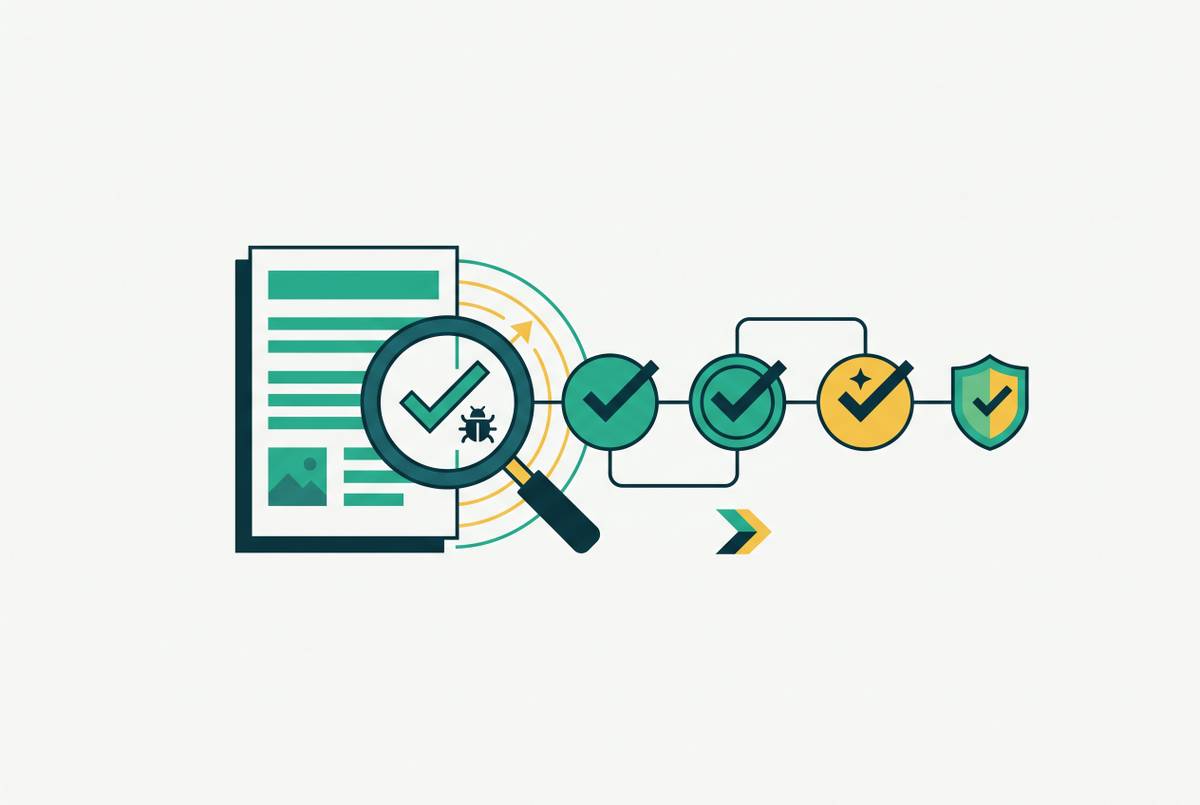
Published security content needs version control because what is accurate when it comes out may no longer be accurate when someone reads it. Each piece should be treated as a living entry, with review cycles matched to how quickly its claims age, clear signals of its current scope, and an owner responsible for keeping it credible.
Why security content has a version problem that most teams don't recognize
Threat actors change their behavior continuously, while publishing workflows often stop at release. SecAlliance's 2026 analysis describes attackers weaponizing new vulnerabilities within hours of disclosure, exploiting gaps between scheduled scans and remediation cycles. Published guidance has a similar gap between the date it is written and the date a practitioner uses it. A claim can be accurate at the first point and operationally misleading at the second.
That is a structural mismatch. The monitor-to-weaponize loop does not pause while a whitepaper clears approval, and an editorial calendar is not much of a deterrent. Yet most content teams still treat publication as completion, so ongoing accuracy has no defined process. The missing versioning policy follows from that assumption.
How threat velocity makes even recent security content go stale
For operational claims, the distance between useful and stale can be measured in hours to days. SecAlliance describes periodic scanning as a snapshot rather than a full picture, leaving organizations to react after vulnerabilities have become threats. A published threat description freezes a similar moment. Its age matters less than what changed after that moment.
Trellix's CyberThreat Report April 2026 makes the boundary visible by defining an observation window. A report can be newly published while the activity it describes belongs to an earlier period.
CyCognito's threat intelligence lifecycle explains why the speed of decay also varies. Tactical intelligence, including specific, real-time indicators of compromise, has the shortest shelf life, while operational and strategic intelligence age more slowly. Content built around those different kinds of evidence inherits different maintenance needs. A single notion of “recent content” hides that distinction.
Most security articles explain concepts, architecture, or strategy. Those subjects do age more slowly, but their supporting claims may not. A strategic article can still name a threat actor, describe an attack pattern, or cite a statistic from a particular threat cycle.
What version control actually means applied to a content library
A published security document is a named state of a living artifact. It can keep the same identity as its contents change. Version control makes the relationship between that identity and its current state explicit.
Microsoft's KB2267602 illustrates the distinction neatly. The KB number stays the same as the definition version changes multiple times a day, so it names a stream of updates. The useful operating principle is to validate the current version when it is needed. The identifier tells someone what they are looking at, while the version tells them which state they have.
Applied to a content library, the stable identity can be a blog post's URL. Its claims, statistics, and threat context belong to the current version of that entry and remain open to revision. The editorial consequence is concrete, namely that each piece needs a version timestamp, a defined review trigger, and an owner.
How existing threat intelligence operations already model this — and what content teams can borrow
Security intelligence already offers a model for this approach. Its publications have to preserve the relationship between evidence, time, and intended use. Content teams can borrow that discipline without taking on the job of a security operations team.
Trellix's April 2026 report describes “data and insights captured primarily between October 1, 2025, and March 31, 2026”. That wording bounds the findings rather than asking readers to infer their age from the cover date. For content teams, the borrowed practice is a clear observation window. A research claim should say which period its evidence describes.
CyCognito's lifecycle treats dissemination as a discrete phase, with intelligence shared promptly in formats suited to the audience. Timing is therefore part of the usefulness of the published artifact. For content teams, the borrowed practice is to account for when the reader receives the claim.
SecAlliance's continuous VTI framework separates real-world exploit tracking, threat actor context, and continuous monitoring. For content teams, the borrowed practice is to separate claims by their exposure to change. Claims about specific exploits go stale fastest, claims about actor context fall in the middle, and claims about architecture or strategy tend to age more slowly. That distinction supplies the basis for a review model that spends effort where it matters.
A tiered review model based on how fast different content types go stale
A universal review schedule can waste effort on stable educational material while leaving a time-sensitive advisory untouched. CyCognito's strategic, operational, and tactical taxonomy provides a direct parallel for dividing the library into three tiers. The tiers describe maintenance needs.
Tier one covers tactical and advisory content that names specific CVEs, active threat actors, current TTPs, or live exploit status. These pieces can decay within days, so their review trigger should be an event. Relevant events include a new CVE touching a covered vulnerability, a named actor changing TTPs, or a vendor patch superseding a described mitigation.
Tier two covers operational content that describes attack patterns, defense architectures, or what vendors can do with a given product version or for a given threat category. Its review cadence should align with major threat report publication cycles, quarterly as a minimum. This gives the team a regular time to check whether the threat context or claims tied to a product still hold. These pieces also go into the active review queue when threats change in ways that affect them.
Tier three covers strategic and educational material, including definitions, frameworks, career guidance, and governance principles. An annual review pass should catch embedded statistics and named examples that have been superseded. The slower schedule gives an explanation that holds up over time less attention than live exploit guidance needs. It also prevents “evergreen” from becoming a polite synonym for forgotten.
Version signals that tell a reader — and the content team — where a piece stands
Readers need enough on the page to tell whether it describes the threats they face now. They should not have to contact the author to discover the limits of the evidence. The minimum signals are a publication date, a separate “last reviewed” date, a scoped data window for research-backed claims, and an explicit coverage boundary. Each answers a different question about the piece's validity.
The publication date shows when the piece first came out, and the review date shows when someone later checked whether it was still accurate. A data window shows the period that was observed, which may end before either of those dates. A scope statement then explains what lies outside the article, whether by design or because coverage stops at a particular point.
A plain on-page sentence can make the boundary concrete. The piece might state that it does not currently cover threat developments after its stated data window. The phrase “does not currently cover” makes the limitation visible while leaving room for a future revision. It promises no completeness that the evidence cannot support, which is more useful than confident silence about the gap.
Cyware's daily threat briefings show how an explicit date stamp and a named cadence can reinforce that message. Each entry belongs to a continuous series. The cadence helps readers understand where the entry sits. For a maintained content library, that sense of position matters as much as the original publication date.
Internal workflow practices that make update cycles executable rather than aspirational
Visible signals need a production process behind them. Without one, a versioning policy is just another document waiting for its own overdue review. Every tier-one and tier-two piece needs a named owner whose responsibility for accuracy continues after publication. As with a vulnerability's remediation owner, naming an owner makes clear who should deal with a change.
The next requirement is a signal path from threat intelligence to the content library. Threat intelligence feeds, vendor security advisories, and CVE trackers need a documented handoff point to the content team. That intake should treat a new CVE or actor TTP change as a potential update trigger for affected coverage. An informal Slack message may alert someone, but it does not define who owns the follow-through.
SecAlliance describes continuous monitoring as keeping pace with a landscape where vulnerabilities and exploits appear constantly. The content equivalent is a standing review queue fed by the intelligence sources the security team already monitors. The review queue brings relevant changes to the person responsible for deciding whether the published claims still hold.
A completed update should leave a visible record, such as a changelog entry, a revised “last reviewed” timestamp, or an explicit delta note. That record connects the review work to the published version. Internal teams can see that the piece received attention, and readers can see that its maintenance did not end at launch.
The capacity objection is real because a serious content program may already produce only a limited number of high-quality pieces per month. Only tier-one and tier-two pieces enter the active review queue, while tier-three material keeps its annual pass.
Why versioning discipline is itself a credibility signal to practitioner audiences
Security practitioners have good reason to distrust unsupported certainty. Practitioners notice stale statistics, superseded CVE guidance, and actor descriptions that no longer match observed behavior, flaws suggesting that the publisher has let the web page go stale and has lost touch with the threats it covers. In a buying process, that can raise questions about how closely the vendor's product intelligence follows current threats.
Versioning discipline offers a different, verifiable signal. Clear evidence windows, review dates, and coverage limits show that the publisher knows when its own claims may need to change. A piece can still be trusted even if its publication date is old. The more revealing combination is old content making unqualified claims about a threat state that has moved on.
That makes the production model relevant to credibility. A studio whose work starts with live threat intelligence is structurally better placed to recognize update triggers than a generalist agency treating security as another subject category. Cyberou is one such research and content studio, applying that versioning discipline to its published output by treating each piece as a named state of a living artifact. That link to intelligence helps the studio keep pieces up to date between scheduled reviews as well as at launch.
Readers can understand which claims remain current, which evidence is bounded, and where coverage stops. Published security content earns trust when its limits are as clear as its conclusions. Versioning makes that honesty a repeatable practice.