
Five distribution surfaces where security thought leadership can get read
Updated 2026-04-21
A channel checklist for cybersecurity vendors who want thought leadership to reach real readers, not just impressions. For each surface below, decide your angle, your proof asset, and one metric on an owned page (demo, doc, or list signup). If you cannot name all three, pause spend until you can.
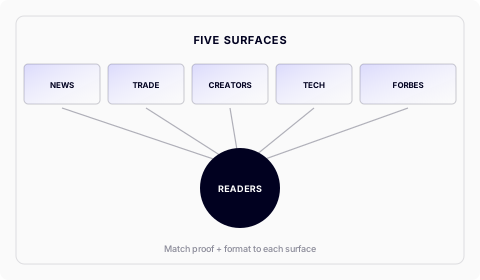
Using this guide
Start at the top and work down. Paid placement without a story that survives technical readers usually wastes budget.
For each channel you are serious about, be able to name the primary reader, what your draft must deliver so they stay, and the one CTA on your site you will measure.
Why a “stack” beats a single channel
Security buyers split time across news, communities, vendor sites, and peer networks. One article or ad rarely moves a pipeline; repeated, consistent proof across a few aligned surfaces usually beats a single spike in one channel.
Treat each surface as its own experiment: hypothesis, asset, time window, and a pre-agreed signal (for example assisted conversions or qualified conversations), not vanity impressions.
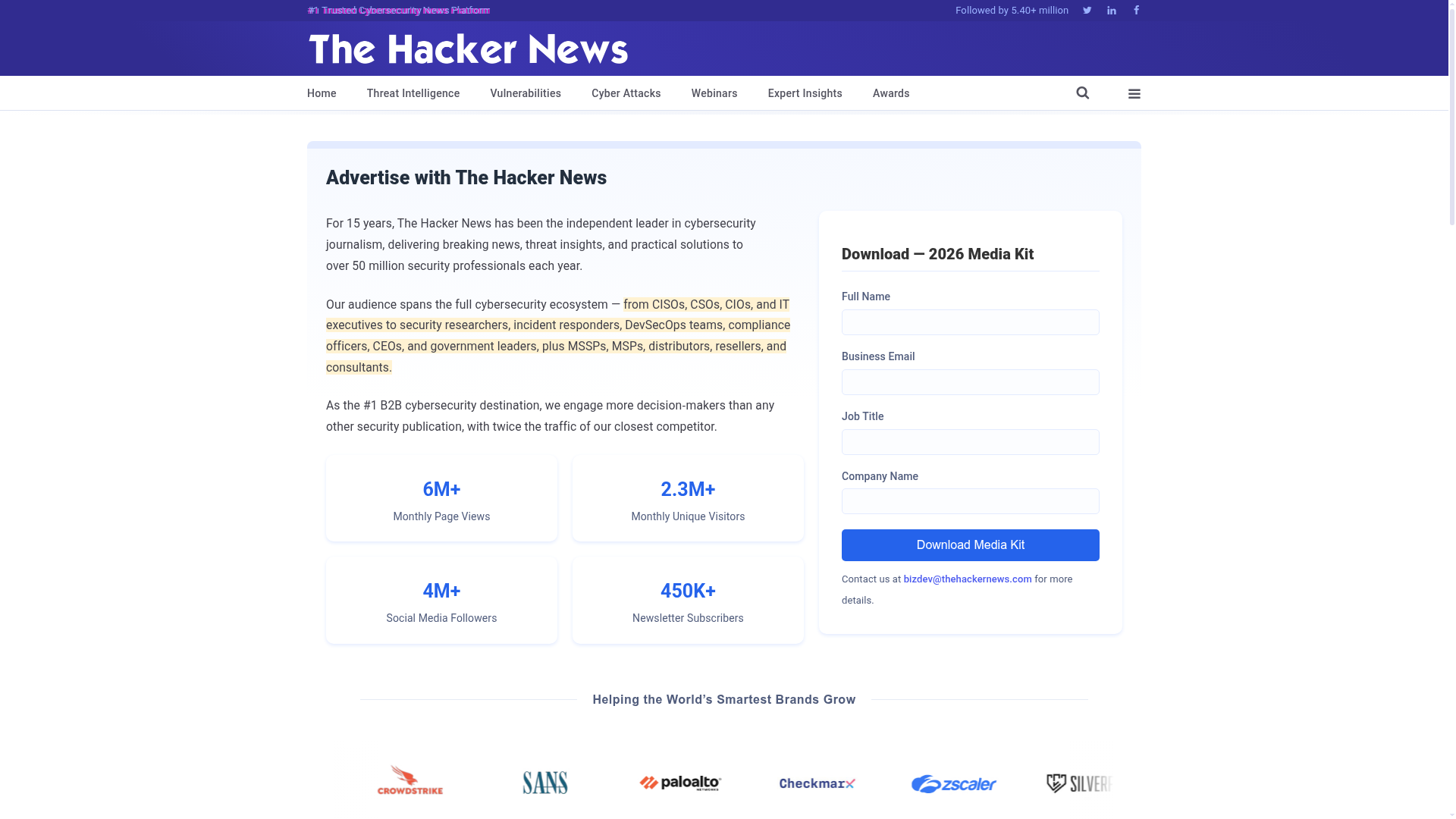
1. Large security news and community sites (e.g. The Hacker News)
Best when you have a sharp story (research, incident analysis, or a contrarian take backed by specifics) and you can handle public comment scrutiny. Sponsored and partner programs are usually labeled; read the vendor page for formats and disclosure rules before you brief creative.
Open the advertising page, list the placements they offer (newsletter, native, and so on), and match one to your asset. If you only have a product brochure, fix the asset first.
Advertising and partnership information for The Hacker News: read the advertising page.
Screenshot
2. Trade and practitioner media (e.g. Dark Reading)
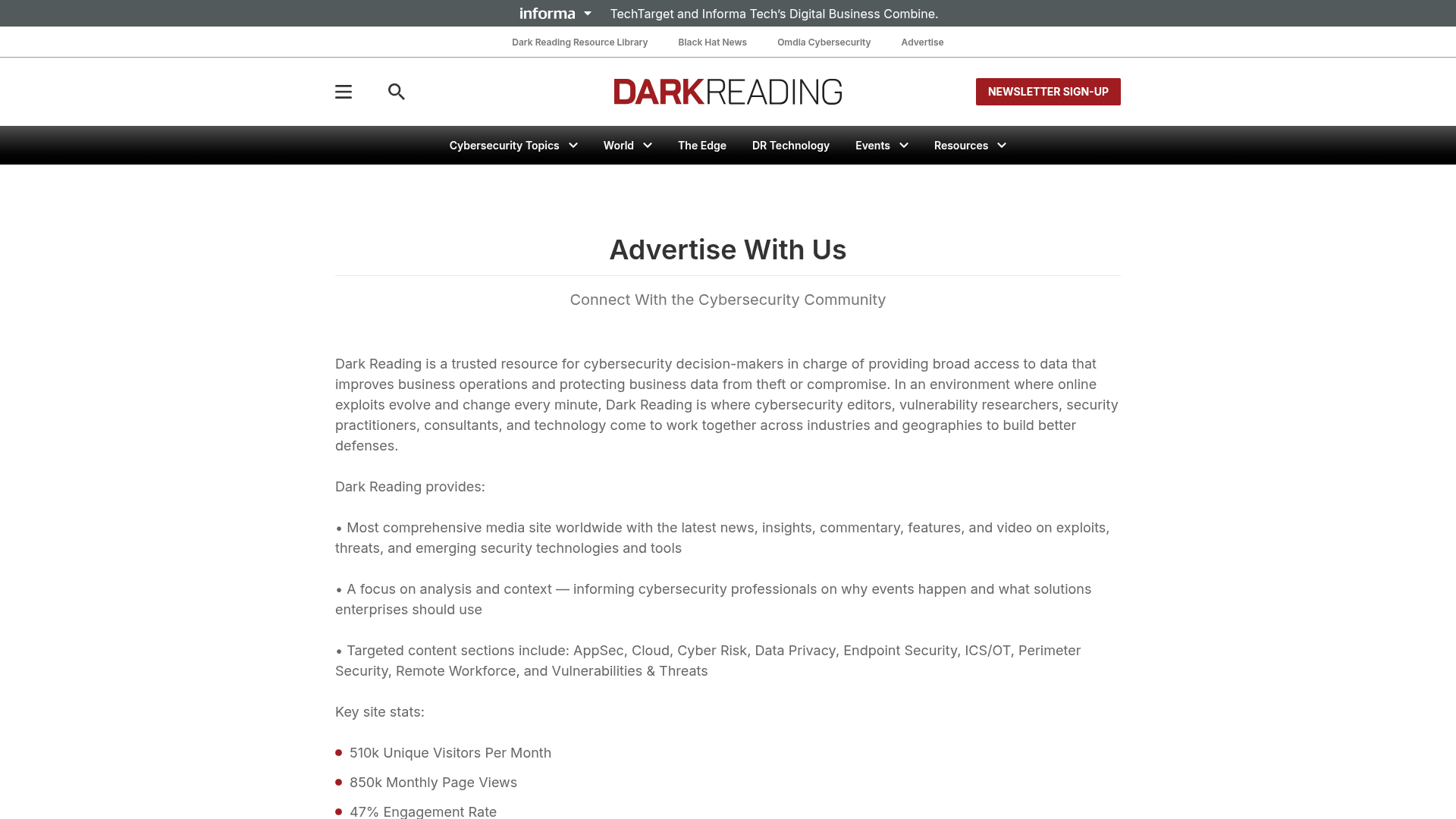
Strong for practitioner narratives when you have a concrete angle - methodology, metrics, or a clearly scoped use case - not a generic “leader in space” claim. Outbound PR still matters: a wire alone rarely replaces a targeted pitch.
Before you commit, read the advertise or contact pages and confirm whether your story fits their sections and audience.
Screenshot
3. Creator and influencer discovery (example: Favikon)
Use discovery tools to shortlist people whose audience overlaps your ICP, then validate engagement quality and topical fit - not follower count alone. “Favikon” is a discovery-oriented platform (not “favicon”).
Export a shortlist, watch three to five recent posts per creator, then propose a co-created asset with a clear disclosure plan.
Screenshot

4. Consumer-facing tech and security news (e.g. BleepingComputer)
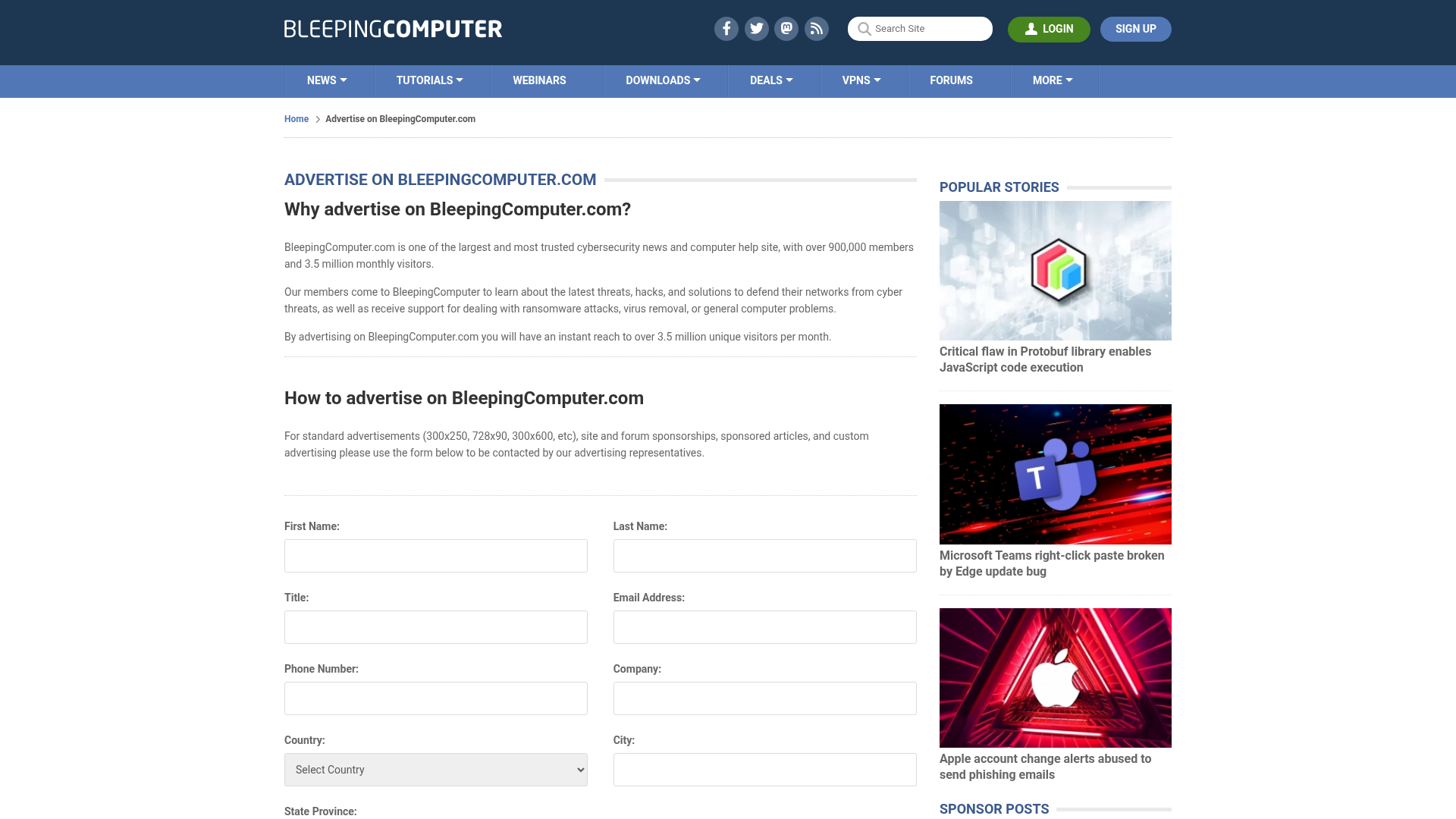
Use when your news is user- or IT-visible (incidents, patches, widespread malware) and you want reach beyond core security buyers. Enterprise buying intent may be lower than in trade press; match the headline to the audience.
Commercial options are usually described on an advertise or contact page - confirm labeling and editorial fit before booking.
Screenshot
5. Forbes Technology Council (executive publishing)
Forbes describes Technology Council as an invitation-only executive community with publishing and networking benefits. It is not a substitute for unsolicited Forbes news coverage. Expect a membership conversation if a nominee is accepted; treat public pages as a starting point, not a contract.
Decide internally first: who would byline, how often they can contribute, and how council content feeds your owned funnel. Then use the official overview and nomination links.
Forbes Technology Council: overview.
Nomination and visibility: nominate and visibility program.
Common questions
What are the five distribution surfaces in this guide?
Large security news and community sites, trade and practitioner media, creator and influencer discovery tools, consumer-facing tech and security news, and executive publishing programs such as Forbes Technology Council. Each section links to official partner or advertising pages where available.
Why use more than one surface instead of one big launch?
Security buyers split attention across news, communities, vendor sites, and peers. Repeated, consistent proof on a few aligned surfaces usually outperforms a single spike in one channel.
How should I measure whether a channel worked?
Pick one owned-page metric before you spend: for example assisted conversions, qualified conversations, or demo requests tied to UTM parameters. Pair it with a clear story and proof asset so you can judge quality, not vanity reach.
When is trade press a better fit than a community news site?
Trade press fits practitioner narratives with methodology, metrics, or scoped use cases. Large community or news sites fit broader visibility when the story is user-visible, such as patches or widespread incidents. Match the outlet’s audience before you book.